Read the evidence
Extract facts with source references, missing-field state and contradictions.
INSURAGENT · PROPERTY UNDERWRITING
InsurAgent reads a property submission, retrieves internal context, checks external sources, calls deterministic rules and pricing, and prepares a decision for an underwriter. Its most important output is not prose—it is reviewable state.
THE RUNTIME
The model is used for interpretation and planning. Business-critical evaluation stays behind typed tools, versioned packages and explicit governance gates.
Extract facts with source references, missing-field state and contradictions.
Search policy, customer, sanctions, company and hazard sources through bounded tools.
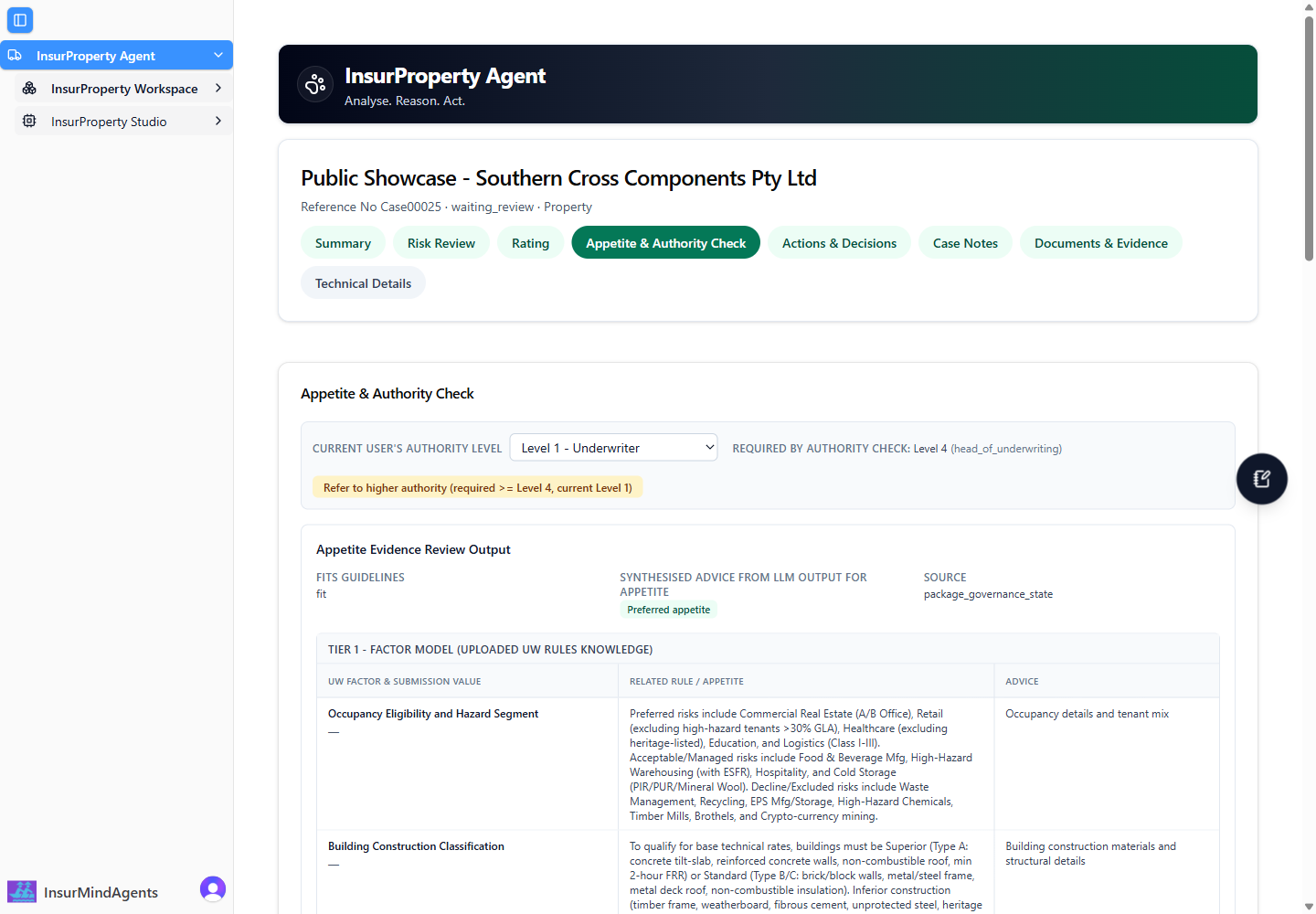
Send controlled inputs to deterministic appetite, authority and rating services.
Prepare a recommendation and preserve the final decision for the underwriter.
RUN EVIDENCE
These are synthetic property submissions. They demonstrate system behaviour; they are not claims about production accuracy or commercial underwriting outcomes.
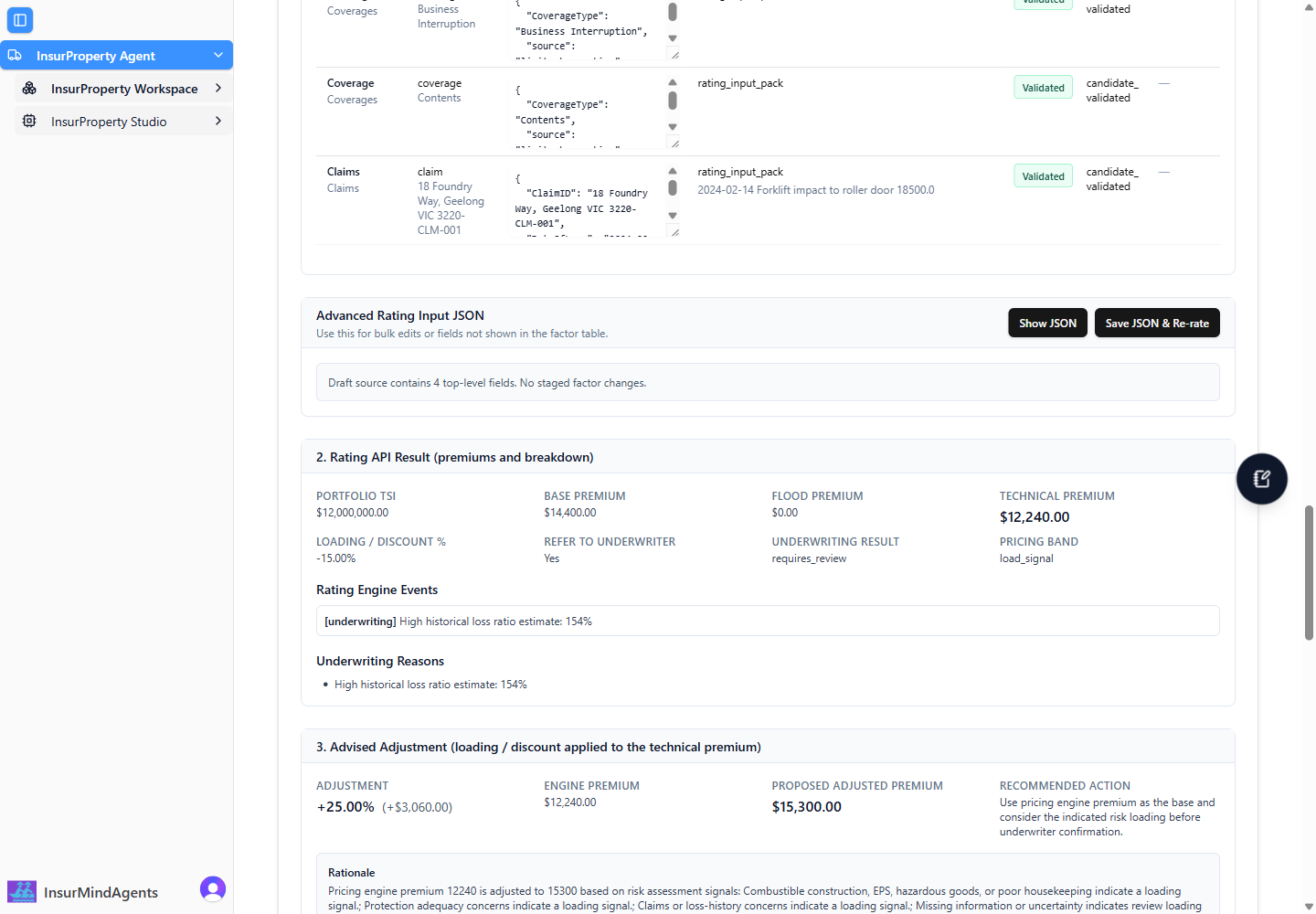
The evidence is sufficient to execute the property rules and return a reviewable price.
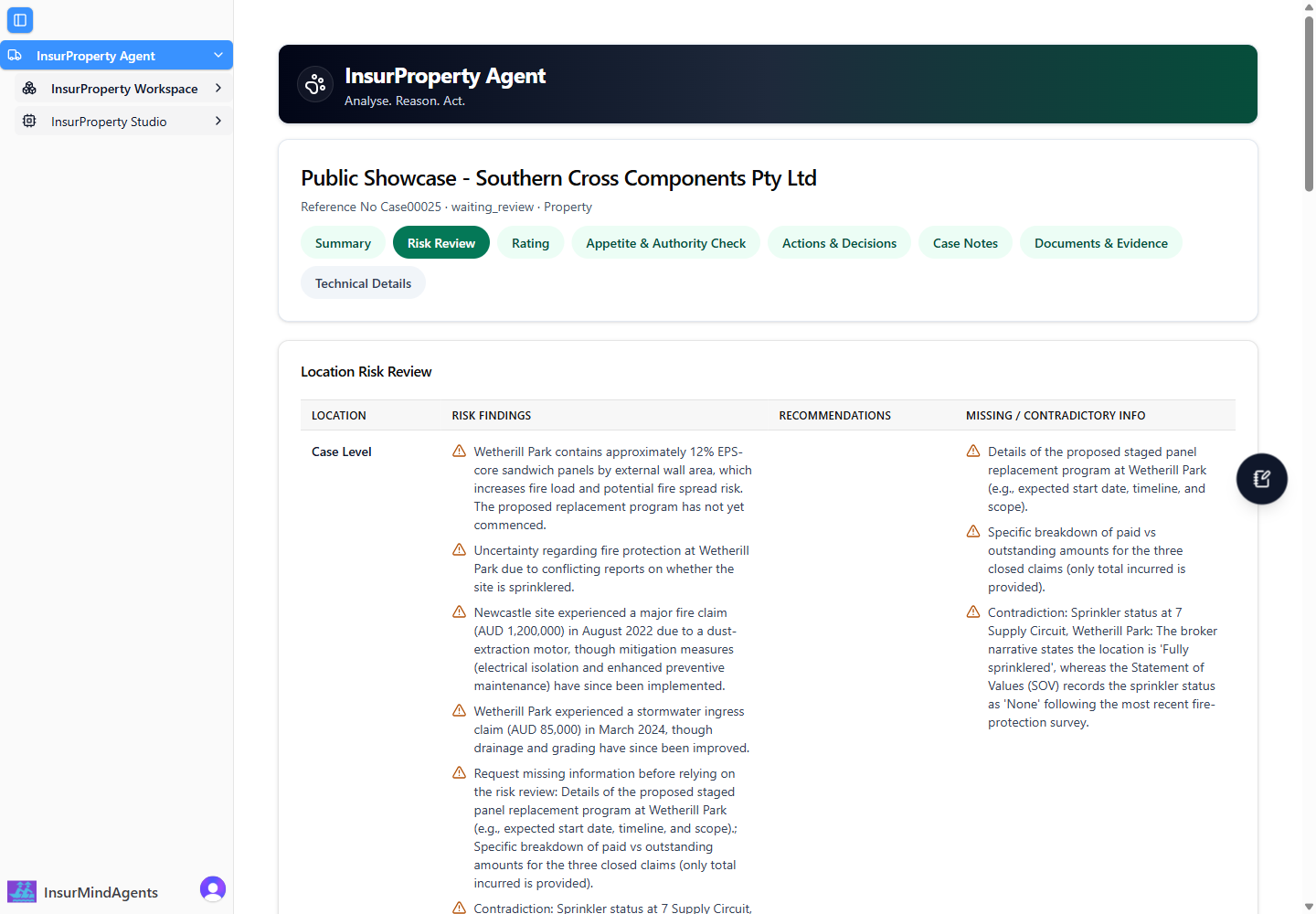
The agent does not silently choose between the proposal and the supporting schedule.
A missing rule match becomes an explicit gap instead of an improvised pricing answer.
REPLAY THE SYSTEM
The walkthrough shows the authenticated product surface. The evidence replay focuses on the state that supports review and diagnosis.
DESIGN POSITION
Missing evidence is never promoted into a business fact merely to complete an output.
A degraded search or unavailable pricing service is recorded rather than disguised.
Document-derived rules must preserve their source, review state and version.
The system can recommend, refer and explain. It cannot silently assume authority.
REPRODUCIBLE INPUTS
The public cases use deliberately fabricated businesses and insurance details.
PRIVATE DEMO
Share the kind of documents, rules or underwriting boundary you want to examine. A useful demo starts with a concrete failure mode.