WORKING INSURANCE AI · BUILT IN THE OPEN

Insurance AI that can show its working.

InsurMind is a collection of working underwriting systems—designed to turn messy documents, business rules and human judgement into decisions that remain traceable.

3synthetic scenarios
174recorded trace steps
0trace error codes
Humanfinal authority
Verified synthetic run
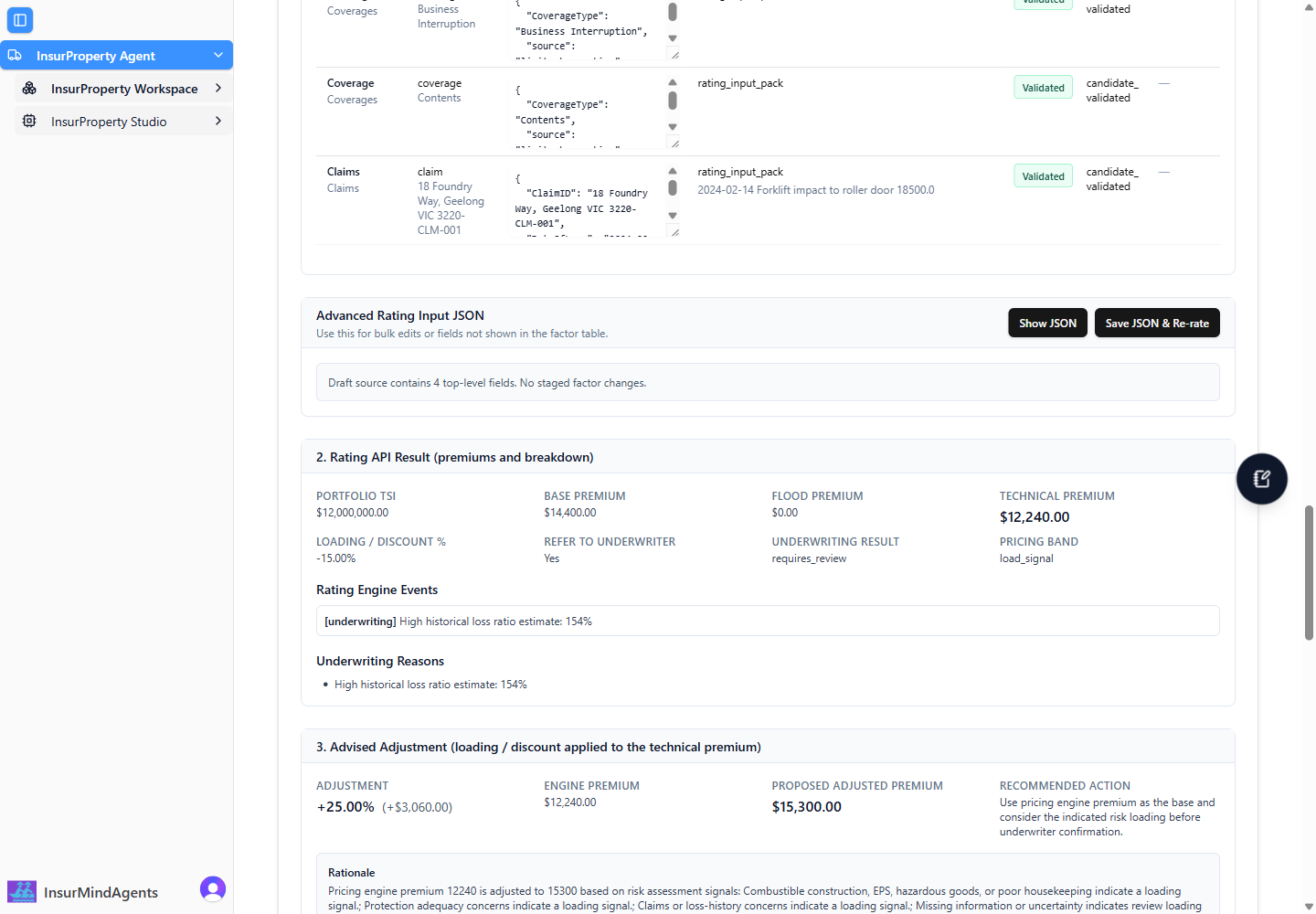
InsurAgent pricing result showing a technical and proposed premium.
Technical premium AUD 12,240
Decision boundary Underwriter review

Most document AI tries to make every source look certain.

The more useful system makes uncertainty operational.

Conflicting source facts become review items. Missing rule coverage becomes a completeness gap. A non-rateable result never becomes a confident premium.

The aim is not to replace underwriting judgement. It is to give that judgement better evidence, repeatable controls and an audit trail.

TWO WORKING SYSTEMS

Different surfaces. One design philosophy.

Both projects explore how AI can interpret insurance evidence without being allowed to quietly redefine the rules.

01 / INSURAGENT

Source-grounded property underwriting agent

A package-first agent runtime that reads submission evidence, performs internal and external checks, calls deterministic rating services, preserves contradictions and stops at a human review gate.

  • Multi-document evidence extraction
  • Deterministic property rating
  • Appetite and authority controls
  • Governed document-to-rule conversion
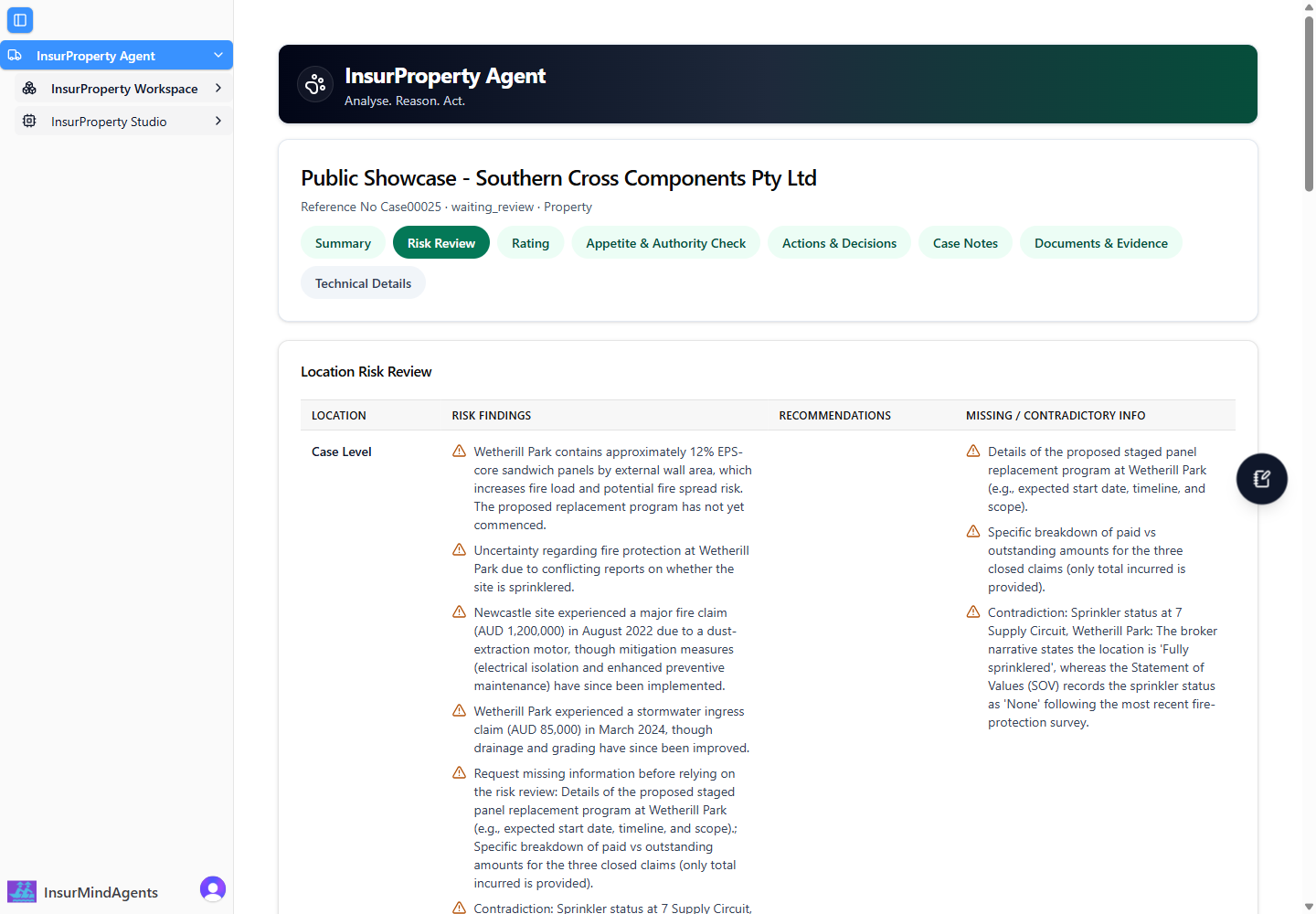
InsurAgent risk review retaining a sprinkler contradiction.
Live UI · synthetic case Conflicting evidence retained
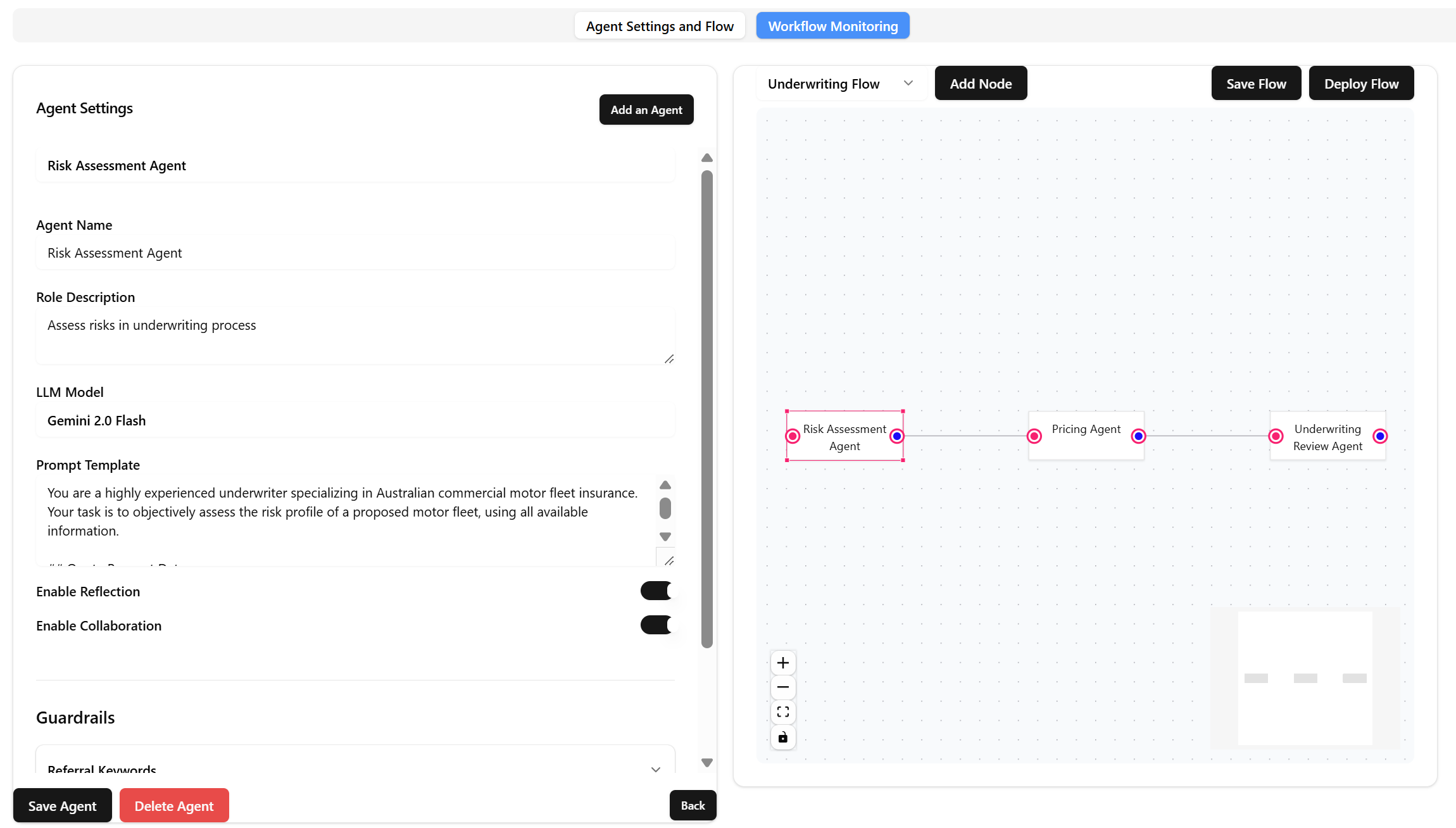
Agentic Underwriting Flow agent configuration and visual workflow.
Agentic Underwriting Flow Agent roles to visible workflow
02 / UNDERWRITING FLOW

Ontology, company knowledge and LLM reasoning

A broader underwriting workbench for document ingestion, domain ontology, company knowledge, rules and pricing, and multi-agent decision support.

  • Ontology-guided document extraction
  • Vector and knowledge-graph retrieval
  • Rules and rating integration
  • Human-visible workflow state

THE CONTROL MODEL

Put AI where interpretation helps. Put controls where certainty matters.

The architecture deliberately separates probabilistic interpretation from deterministic evaluation and human authority.

01 SOURCE Submission evidence

PDFs, schedules, emails, tables and broker narratives.

02 INTERPRET AI-assisted structure

Candidate facts, citations, missing fields and contradictions.

03 EVALUATE Deterministic services

Schemas, rules, pricing, authority and versioned outputs.

04 CONTROL Underwriter decision

Review, referral, approval and final accountability.

WHY THIS IS DIFFERENT

Not a polished prompt wrapped around a schema.

The differentiator is the control loop around the model: source grounding, completeness validation, deterministic execution, explicit fallbacks and reviewable state.

Rule → sourceEvery material rule should show where it came from.
Source → ruleEvery material source requirement should be represented or flagged.
Unknown stays unknownMissing evidence should not become an inferred business fact.
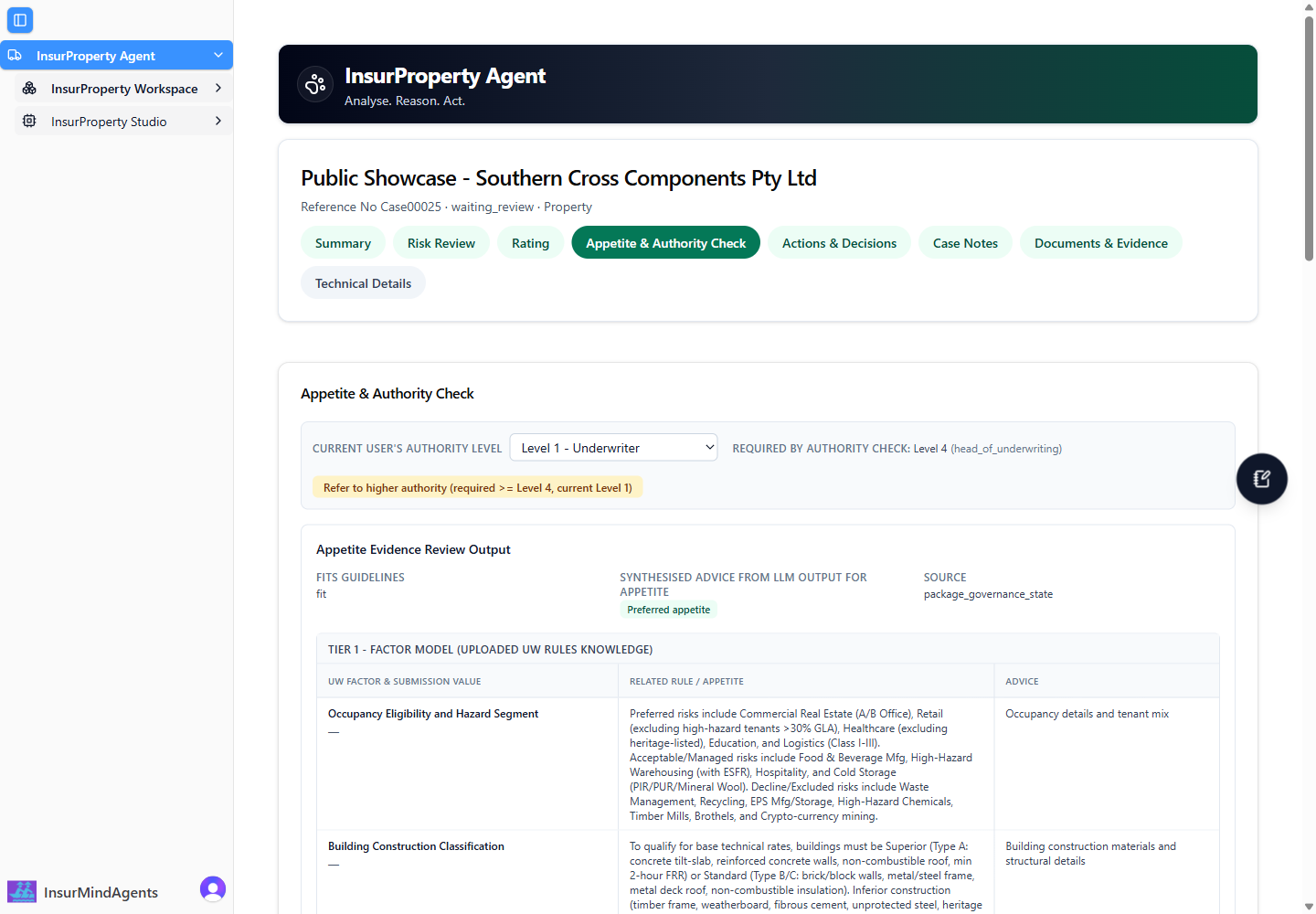
InsurAgent authority page showing a Level 4 referral requirement.
AUTHORITY CONTROL Level 1 user → Level 4 referral

START A CONVERSATION

Bring an underwriting problem, not a pitch deck.

If you work with insurance documents, rules, knowledge systems or underwriting operations, share the workflow you would want to test.

Private product walkthrough Architecture discussion Research collaboration

Completing security check…